
Knights of the Roundtable: getting your experts together
Building Organizational Memory

I’ve been working in software and technical services firms for over 30 years. I’m sharing what I learned right here. Subscribe if you’d like to get these posts in your inbox. One of the challenges every company faces is how to build organizational memory, and startups struggle with this even more than most. I’ll share more secrets of building organizational memory here.
If we’re going to build organizational memory, we need ways to accelerate organizational learning. One way is to pull your team of experts together to share what they know and learn from each other. They’re all out doing their work, and then gather them together periodically to solve problems together.
“Knights of the Roundtable”
You’ve heard lots of different terms for this: Tiger team, Taskforce, SWAT team, etc. I like thinking knights of the roundtable. Around that table, you gather the experts you need, and you expect each of them to contribute.
This is one of the most intellectually satisfying ways to learn when you’re part of a team like this. Think of getting your sales team together to discuss their deals. Engineers to discuss their challenges. Consultants to talk about their projects and clients. CEOs to talk about their challenges with other CEOs, or with their key operating executives.
The name doesn’t matter too much - but it should reflect your culture, and should carry positive connotations and team-building dynamics.
A Trilogy Story
At Trilogy, in 1995, five of us in our 20’s were brought together to figure out how to “fix” field delivery. We were given responsibility for delivering successful projects to production. Entry into the team required leading and delivering a program to production (as the technical lead). Soon there were 7 of us. We had a great camaraderie and we learned from each other as we shared updates on each project just about every Friday. Our number of project failures dropped to zero that year as we worked hard to prefect how this innovative software should be deployed for our clients. It was also a group of some of the smartest and hardest working people I’ve ever known in my life. Two of us went on to found our own companies, two went on to be high level executives at companies you would see on CNBC. The final three became deep experts and contributors in their fields of expertise - technically and managerially. At the time, we were early in our careers, and we were being entrusted with something crucially important for the company’s success.
This group was a classic knights of the roundtable organization. We were highly respected professionals within the services team, and we were empowered to make changes in how deployments were designed, staffed, and deployed. We achieved our mission and we learned so much from each other along the way.
Challenges
Lets look at some of the challenges you’ll face when pulling a team like this together:
This is a practical “getting things done” role. If there’s confusion about this, make changes in who is in your roundtable. You might have people wanting to be in the “circle of trust” but who aren’t really interested in doing the work.
It is ideally not an organizational role with reporting lines, but a flexible way to pull experts together who might sit in different parts the organization. In this forum they are peers, but they are potentially not peers in their day-to-day work. Your VP and your technical lead may have equal voice in the discussion at this table on this subject of focus.
You have to manage the size. A 30 person group doesn’t have a valuable discussion and wastes a lot of company time when meeting. Five is a good number for discussion and group dynamics. Ten is probably too many for most circumstances but not all.
You can trigger a fear of missing out in other top performers in your company. Related to the first point, this is when you have valuable team members who are not invited to the expert team discussions, who are feeling left out. It may help to sit with folks like this one-on-one and talk about it: not every expert can be invited to every “roundtable” as your business grows, or they’d never get any work done. Note their interest and keep them in mind for the next opportunity or need. Remind them to trust the people that you have selected. Consider pairing them with someone who is in the roundtable to stay informed and make sure their viewpoint is represented to the group by someone they trust.
When someone leaves the team, or the company, it can have a negative effect on morale, or take on a larger importance. This is more of a risk if you only have one such team of experts in your company, and the risk fades quickly as you grow.
Who wants more committees? It’s true that many companies associate committees of any sort with bloat and bureaucracy. There’s a reason for that. You can combat that with setting an end date for any team you pull together, or by making it clear who is responsible for this team pulling together to produce - which should be one person. Someone who will keep it from being an exercise of navel gazing.
Stagnation is a risk. A well-performing team can start to get stale as the original mission gets solved and the next mission is less clear, or requires a different team to solve. Consider setting a time limit (3 months, 6 months, 1 year) for your knights of the roundtable, where they will naturally sunset the group. And regardless, don’t be afraid to form new teams and disband old ones to keep things from ossifying.
Opportunities
Forming these teams of experts opens up several opportunities, which make overcoming those challenges worthwhile. Some of those opportunities are listed below, no doubt you can think of others:
Feedback loop. The exchange of information, ideas, and challenges within the team acts as a feedback loop for experts who may not receive a lot of useful feedback in their roles. Their immediate managers may lack the expertise to provide that feedback for example. They may otherwise have little contact with other experts in their field: for example, consultants working on separate accounts in different locations; or engineers working on different products or in different offices.
Increased repetitions for learning. Each expert learns not only from their own repetitions, but from the reps that others are having and sharing with the team. What they tried, what worked, what didn’t, what could have been better, etc.
Camaraderie. Don't underestimate the value to team morale of building some camaraderie amongst them. People who like each other and respect each other tend to work better together and support each other.
Assign Problems to Solve. Don’t just leave this as ad-hoc time - give this team problems to solve or explore - harness that brain power and put it to work.
Leadership. In these settings, you may identify new or potential leaders based on how they are able to synthesize and respond to the challenges.
Action Plans and Commitments. These are the heart of any team like this - taking down actions, and committing to get them done and report back results. There has to be a high degree of accountability.
Larger sharing opportunities. There are opportunities to open the aperture up to a bigger audience - and if you want to do this I would recommend making it less frequent and with a specific topic in mind that has broad educational value and appeal to your team. For example, “We’ve been discussing the best way to manage our clients’ devOps needs with Camunda, we’re inviting everyone to join us to hear how we’re planning to approach it going forward, and to provide feedback and Q&A into the process.”
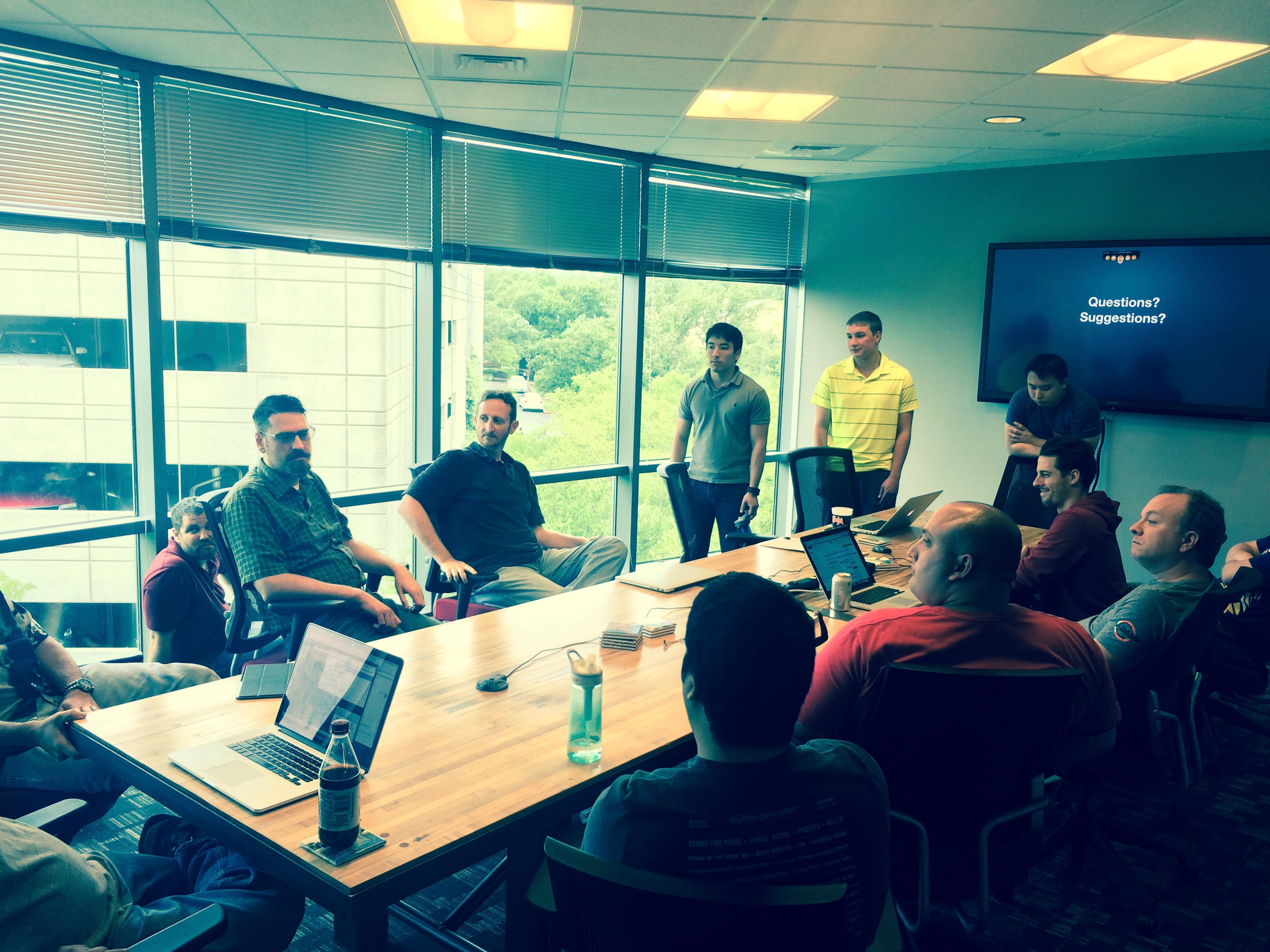
We used this organizing principle at BP3 to improve recruiting, engineering, consulting, and even operations at various times. The most persistent application was in recruiting. Other groups were put together more temporarily to address challenges that, once resolved, removed the need for meeting. We also held a standing delivery team meeting every Friday for more than a decade that at times was 100% logistical but at other times was a vehicle for sorting out delivery and commercial issues.
Don’t be afraid to design and re-design these types of groups every year. Everything has to evolve, and you want your team used to the idea that these things evolve as well!
Look for opportunities to get your experts together - you’ll form more organizational memory and resilience, you’ll build team chemistry, and your team will value learning from each other. Sometimes these team memories are their best memories of working at your company in the future. You’re going to help establish lifelong business and personal relationships.
A side note: at BP3, our largest conference room had the bowling alley table that we procured from Jobe Fabrications in Austin (pictured above). It was made from reclaimed bowling alley wood and it was a distinct piece of furniture that was too heavy to move. One of my favorite pieces of office furniture we ever used!
You might be surprised that you can acquire unique pieces of furniture to make your office stand out - without breaking the bank.